| April 16-30 |
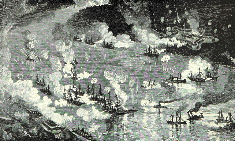
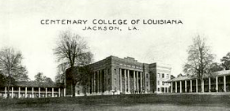
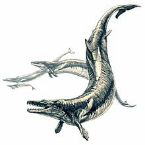
| April 16, 1952 The Baton Rouge Morning Advocate and State-Times sponsored its annual “Thrifty Kitchen Cooking School at the Baton Rouge High School Auditorium tonight in 1952. According to reports, the crowd was enthralled when Miss Rossie Anne Gibson, home economist, whipped up the featured dish, a Bologna Cups-Hot Potato Salad, which would appeal even to “the most finicky eater.” Miss Gibson told the crowd that she had gone through ten pounds of bologna before she discovered the secret to preparing the dish, which was to leave the casing on the bologna while it was browning in the skillet. She assured the audience that the concoction would make an excellent Sunday night dish. April 17, 1837 Dr. Tichenor was born in Ohio County, Kentucky, today in 1837. George H. Tichenor had served in the Confederate Army as an assistant surgeon. While at this post, he developed the original Dr. Tichenor's antiseptic formula. In 1863, he was wounded in a battle near New Albany, Mississippi, and saved his leg using the formula. Tichenor's reputation would later suffer from his intransigence in not allowing his methods to be used on Union soldiers. After the war, he was encouraged to manufacture and sell his amazing germ-killing formula. He practiced medicine in Baton Rouge from 1869-1887. He died in 1923, and is buried in Innis in Pointe Coupee Parish. April 18, 1862 The first shots of the Civil War in Louisiana were fired today in 1862. After the outbreak of the war, the Confederates had hastily fortified Forts Jackson and St. Philip at the mouth of the Mississippi River. On April 18th, 1862, a Union fleet under the command of Admiral David Farragut would begin the shelling the forts and continue the bombardment for the next five days. On the 24th, Farragut and the fleet would sail past the forts. As Farragut had hoped, the aim of the Confederate gunners was poor, and his fleet suffered little damage. The fleet reached New Orleans the following day, and the forts surrendered on the 28th. April 19, 1979 In 1825, the Louisiana Legislature chartered four public colleges. One of these was the College of Louisiana at Jackson. In 1839, the Methodist Conference of Mississippi had established a college in Clinton, Mississippi. In 1845, the College of Louisiana lost its funding from the legislature, so Centenary purchased the campus, moved to Jackson and took a new name, the Centenary College of Louisiana. The college would continue to struggle, and move to Shreveport in 1905. Centenary’s 1825 founding gives it the distinction of being the oldest liberal arts college west of the Alleghenies. The abandoned campus in Jackson was added to the National Register of Historic Places today in 1979. April 20, 2010 Today in 2010, the Deepwater Horizon drilling rig exploded in the Macondo Prospect oil field about forty-five miles southeast of Plaquemines Parish. The explosion and subsequent fire resulted in the sinking of the Deepwater Horizon and the deaths of eleven workers. Seventeen others were also injured in the blowout that caused a massive offshore oil spill in the Gulf of Mexico. , considered the largest accidental marine oil spill in the world, and the largest environmental disaster in U.S. history. By 2013, criminal and civil settlements and payments had cost the company $42.2 billion. In July 2015, BP was fined $18.7 billion, the largest corporate settlement in U. S. history. April 21, 1939 Sister Helen Prejean was born today in 1939 in Baton Rouge. She joined the Sisters of St. Joseph of Medaille (now the Congregation of St. Joseph) in 1957. She began her prison ministry in 1981, when she dedicated her life to the poor of New Orleans. While living in the St. Thomas housing project, she began correspondence with Patrick Sonnier, the convicted killer of two St. Tammany Parish teenagers, who had been sentenced to die in the electric chair at Angola State Prison. Sister Helen’s story and her relationship with Sonnier was dramatized in the 1995 film Dead Man Walking. April 22, 50,000 BCE If there had been an Earth Day in Louisiana 50,000 years ago, it would have been celebrated at the bottom of a pre-historic sea. The first man to discover fossil proof of this sea was Judge Henry Bry, an amateur geologist-paleontologist from Northeast Louisiana. In 1829, he found the fossil remains of a large pre-historic sea mammal embedded in the sides of a steep hill running along a creek near Columbia. The fossil ran along a 400-foot long curved line. Paleontologists would decide that Bry had discovered a whale-like mammal of a size and type never seen before. It would be called, "Zeuglodon cetoides". April 23, 1910 A terrible fire destroyed seven blocks in downtown Lake Charles today in 1910. it began in a small trash can behind Blaske's Soft Drink Stand, or the "Old Opera House Saloon" on North Ryan Street. Firemen were no match for the gusty winds and the highly flammable construction, mainly wooden buildings. The fire spread quickly, engulfing block after block, consuming more than 100 buildings. Among the structural causalities, were the Immaculate Conception Church, City Hall and the Calcasieu Parish Courthouse. A new red and white Spanish Baroque-style City Hall with high arched windows and a campanile would open the following year and serve the city until 1978. April 24, 1877 Francis T. Nicholls was sworn in as Louisiana’s twenty-eighth governor today in 1877. He was born in Donaldsonville in 1834, and attended West Point, graduating in 1855. He lost his left arm commanding the Second Louisiana Brigade at the first Winchester battle on October 15, 1862, and he lost a leg at the second battle of Fredericksburg. During his first administration, he worked to rid the state of carpetbag rule. In his second administration, he was instrumental in defeating the Louisiana Lottery Company. In 1892, he was appointed chief justice of the Louisiana Supreme Court. Nicholls State University was established and named for him in 1948. April 25, 1831 The first railroad in New Orleans began carrying people and goods between the Mississippi River front and Lake Pontchartrain today in 1831. The Pontchartrain Rail- Road was chartered in 1830 and closed more than one hundred years later. The six- mile line connected the Faubourg Marigny neighborhood with the town of Milneburg on the Lakefront. The route of the railway ran down the center of what is now Elysian Fields Avenue. It was the third common carrier railroad to officially open for service to the public in the United States, following the Baltimore and Ohio and the South Carolina Canal and Rail Road Company. April 26, 1988 This week in 1988, an artist's exhibition at the Upstairs Gallery in Beverly Hills, California, launched a world-wide sensation. Cajun artist George Rodrigue had been acclaimed as a Louisiana painter for the better part of a decade, and in preparation for the 1984 World's Fair in New Orleans, he painted a painted a series of Louisiana images. One of those images, a loup garou, looked suspiciously like his own terrier- mix, Tiffany. The painting was not immediately beloved and was still unsold four years later when it was shipped to California for the Beverly Hills exhibit. California critics would be enchanted and begin referring to it as the "Blue Dog." April 27, 1970 The first New Orleans Jazz and Heritage Festival, better known as Jazzfest, opened this week in 1970. The New Orleans Jazz & Heritage Foundation, a nonprofit organization, was established to oversee the Festival and hired George Wein, the father of the Newport Jazz Festival to design and produce a unique festival for New Orleans. Wein’s concept of the Louisiana Heritage Fair was a large daytime fair with multiple stages featuring a wide variety of indigenous music styles, food booths of Louisiana cuisine, and arts and crafts booths, along with an evening concert series. Mahalia Jackson, Duke Ellington, Pete Fountain, Al Hirt, Fats Domino and others would perform at the first festival. April 28, 1960 Tens of thousands cheered Charles DeGaulle when he visited New Orleans today in 1960. New Orleans had been the last stop of the French President’s official visit to the United States, and after a triumphal entry parade, DeGaulle spoke at Jackson Square, saying (in English), “I am aware not only of the historical links between this city and France, but also of the present and future for us together.” He concluded his remarks with, “Long live New Orleans! Long live the United States! Long live France!” On the following day, there would be another parade and a ceremony commemorating the Louisiana Purchase in Jackson Square. April 29, 1785 John James Audubon was born in Haiti this week in 1785. In 1803, he settled on father's estate "Mill Grove" near Philadelphia and began studying and drawing birds. After failing in other businesses, he decided to attempt to publish a collection of paintings of American birds. Audubon and his wife moved to St. Francisville and 1825, where he taught music and drawing. Birds of America, his four-volume work was published between 1827 and 1838 and received favorable reception by European publishers, after meeting a cool reception from American publishers and critics. In 1841, he moved to New York and settled on the estate "Minnie's Land", now Audubon Park. April 30, 1812 Happy Birthday, Louisiana! On the ninth anniversary of the agreement was reached on purchase of Louisiana from France, Louisiana was admitted to the Union as the 18th state today in 1812. The State of Louisiana would be something new for the United States. It was the first state west of the Mississippi River to seek statehood; it would be admitted to the United States with no fixed borders as the Adams-Ona Treaty establishing the Sabine River as the western edge of the state was still seven years away; it would have political traditions were not outgrowths of British colonial experience, but of the monarchies of France and Spain. |